









The idea of using one’s own electric car as a rolling power storage unit for the house fascinates many solar households. The technology is still young, and the market is confusing. We clarify what is already possible today, what it costs, and what you should pay attention to.
Bidirectional Wallbox explained simply and honestly evaluated
A bidirectional wallbox can do more than just charge, as it also feeds electricity from the car back into the house. This turns the vehicle battery into a mobile interim storage for your solar power. However, in 2026, this technology is still in its infancy, with few models and high prices.
As PV-24, we will guide you through the topic and honestly tell you what works today and what is still future music. This guide explains the function, types, prerequisites, and costs, and evaluates for whom entry is already worthwhile.
What is a bidirectional wallbox?
A normal charging station only sends electricity in one direction, from the socket to the car. A bidirectional wallbox, on the other hand, masters both directions. It charges the vehicle and, if necessary, draws energy from the battery again.
This turns the electric car into a large storage unit on wheels. A mid-range electric car often has 60 to 80 kWh capacity, many times that of a typical home storage unit. This energy can be actively used instead of being left unused in the battery.
Such bidirectional devices are also referred to as bidirectional charging stations. In our range of wallboxes, you will primarily find classic models today, but bidirectional technology is noticeably approaching.
V2H V2G and V2L briefly explained
Behind the topic are three acronyms. V2H stands for Vehicle to Home and feeds electricity into the house’s own grid. V2G stands for Vehicle to Grid and feeds into the public grid.
The third acronym is V2L for Vehicle to Load. Here, the car becomes a mobile energy source via a socket, for example, for tools on a construction site or devices when camping.
How bidirectional charging works in the household
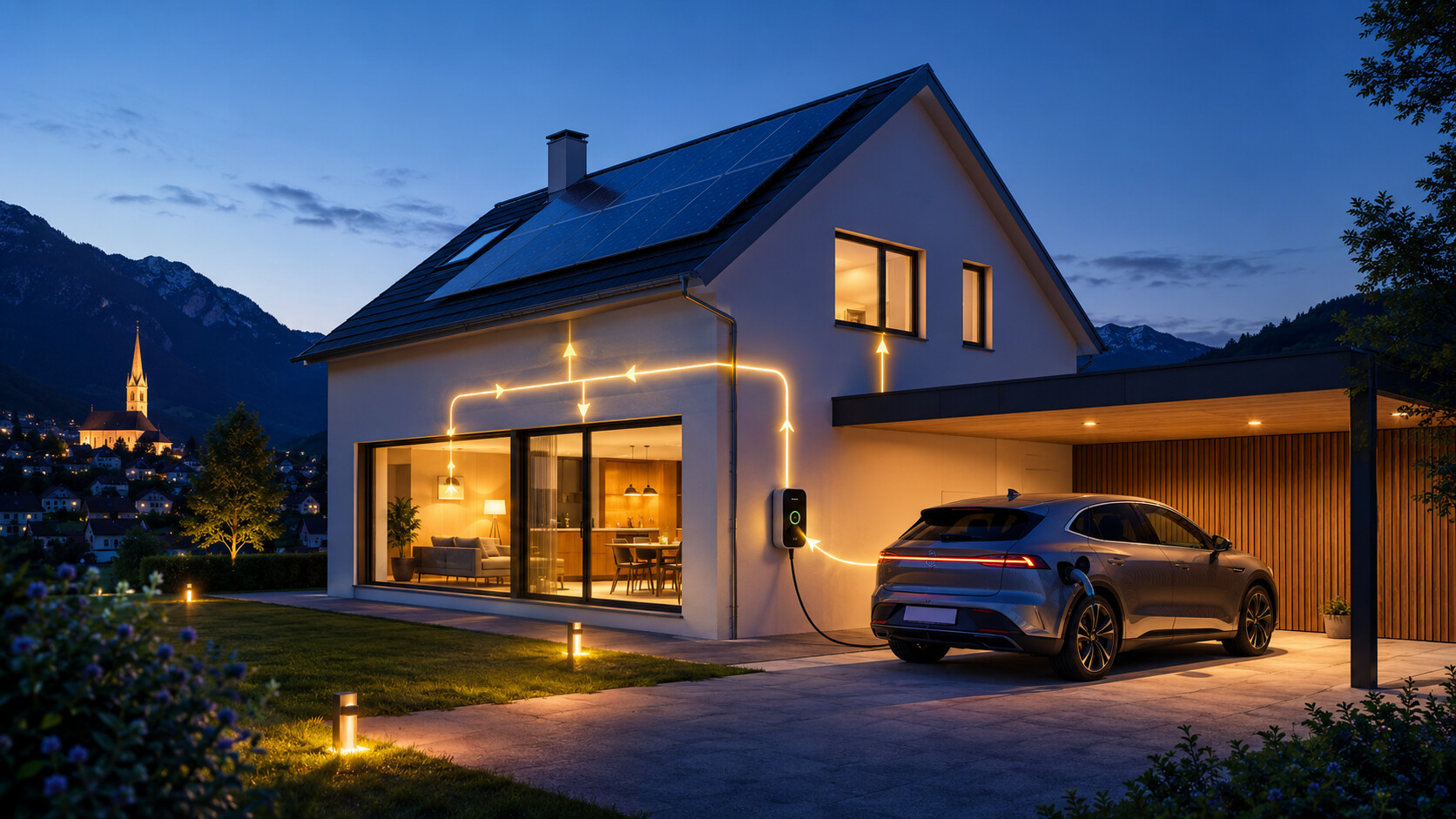
With a bidirectional wallbox, direct current from the vehicle battery first flows into an inverter. There, it is converted into household alternating current. Subsequently, the energy is available at every socket in the house.
In conjunction with a photovoltaic system, this results in a clear benefit. During the day, you charge with solar power, and in the evening, the car battery supplies the house. This significantly increases your self-consumption. Expensive peak electricity consumption can be smoothed out.
In principle, the car takes on the role that a power storage unit in the basement would otherwise play. The advantage lies in the size of the vehicle battery. The disadvantage is that the car must be plugged in and parked at home for this purpose.
AC or DC bidirectional wallbox
Technically, there are two ways to operate a wallbox bidirectionally. The difference lies in where the electricity is converted. This determines the price, efficiency, and availability.
AC bidirectional according to ISO 15118-20
In the AC variant, the inverter in the car handles the conversion. This is made possible by the new ISO 15118-20 standard. AC bidirectional devices are cheaper and easier to install, with the first models expected in 2026.
DC bidirectional wallbox
A DC bidirectional wallbox, on the other hand, converts the electricity itself, directly in the charging station. This works somewhat more efficiently and is already available today. However, these devices are significantly more expensive and technically more complex.
What are the prerequisites for bidirectional charging?
For a wallbox to function for bidirectional charging, several components must fit together. It is not enough to simply screw a new device to the wall.
These are the key points:
- Compatible electric car that technically supports bidirectional charging
- Bidirectional wallbox as an AC or DC variant
- Suitable inverter and a coordinated home energy system
- Installation by an approved electrical specialist company
- Registration with the grid operator, and an additional permit for feeding into the public grid
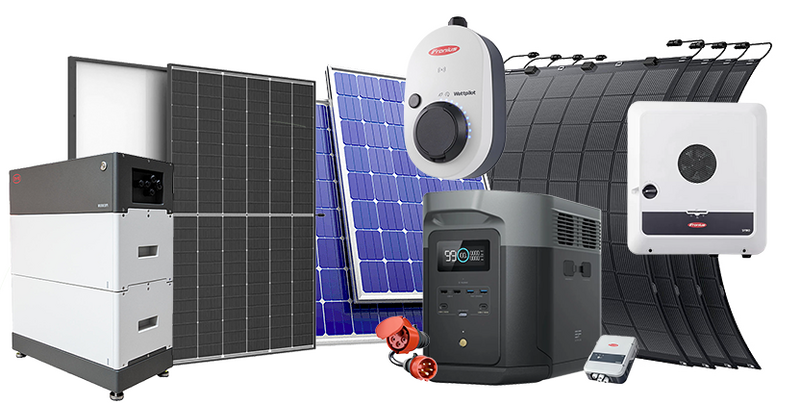
The inverter, in particular, plays a central role. A modern hybrid inverter like the Fronius GEN24, already forms the basis for a V2H system. Making a wallbox V2H-capable is therefore primarily a question of the right overall system.
These electric cars can charge bidirectionally
Not every electric car can feed electricity back into the grid. Manufacturers are only gradually equipping their models with the necessary technology. Therefore, before purchasing a wallbox, it is worth checking your own vehicle.

Matthias Schiestl and his team are always ready to help you reliably and quickly with any questions and with how you can use the devices reliably and efficiently in your everyday life. » learn more about us
+43 676 88731200 9 AM - 12 PM weekdays info@pv-24.at
The following overview shows some common models and their functions:
| Vehicle | Interface | Function |
|---|---|---|
| Nissan Leaf | CHAdeMO | V2H, V2G |
| VW ID.3 to ID.7 | CCS, from software 3.5 | V2H, V2G |
| Hyundai Ioniq 5 and 6 | CCS, V2L as standard | V2L, V2H |
| Kia EV6 | CCS, V2L as standard | V2L, V2H |
This table reflects a status as of 2026 and is subject to continuous change. Many cars already offer V2L as standard, but true V2H or V2G depends on both the vehicle and the wallbox. Therefore, always check with the manufacturer for approval.
Fronius and Bidirectional Charging
Many solar households specifically inquire about Fronius bidirectional charging because they already use the manufacturer’s devices. The honest answer is that the Fronius Wattpilot currently does not yet charge bidirectionally.
Nevertheless, things are moving forward. The new Wattpilot Flex is hardware-ready for V2X, but the necessary software activation is still pending. Until then, the path to V2H leads via a Fronius GEN24 inverter in combination with a separate bidirectional DC wallbox.
As a certified specialist dealer, we carry Fronius wallboxes and honestly assess the current situation. Instead of promising a product that does not yet exist, we show you how to prepare your system now.
What does a bidirectional wallbox cost?
When it comes to the price of a bidirectional wallbox, a realistic view is worthwhile. The technology is new and accordingly expensive. Those who want to buy today should expect a significant surcharge compared to a normal charging station.
The following guidelines provide a rough orientation:
| Solution | Guide price |
|---|---|
| AC bidirectional wallbox | cheaper in future, market launch 2026 |
| DC bidirectional wallbox | around 3,000 to 9,000 euros |
| Complete system with installation | around 4,000 to 15,000 euros |
These values are guidelines and depend heavily on the setup. In Germany, there has been federal funding for bidirectional charging points in multi-party buildings since 2026; this regulation does not apply in Austria. Those wishing to purchase a bidirectional wallbox should therefore check the funding situation regionally.
Is it worth making the switch now?
The technology is fascinating, but not yet mature in 2026. There are few compatible cars, high prices, and partly open standards. For most households, it is therefore advisable to observe the development first.
Nevertheless, you do not have to remain inactive. If you are already planning a new PV system, you can prepare it with a suitable inverter. This way, bidirectional charging can be retrofitted later without replacing the entire system.
Whether a bidirectional wallbox is worthwhile for you depends on your car, system, and budget. We would be happy to examine your initial situation and tell you frankly whether waiting is worthwhile. You can reach us by phone, WhatsApp, and chat.
Frequently Asked Questions about Bidirectional Wallboxes
Is bidirectional charging allowed in Austria?
In Austria, V2H and V2L are permitted, meaning you can use your car battery for your own home. Feeding into the public grid via V2G is not yet regularly possible because the legal framework for it is missing.
Does bidirectional charging harm my EV battery?
Every charging and discharging process stresses the battery. However, modern systems operate gently and only use a portion of the capacity. Many manufacturers now explicitly include bidirectional charging in their warranty.
Do I still need a stationary electricity storage system?
Not necessarily, because the car takes on the storage role. However, if the vehicle is often not at home, a fixed home storage system remains the more reliable solution. Often, both storage systems complement each other effectively.
Can I retrofit an existing wallbox to be bidirectional?
A normal wallbox cannot simply be retrofitted to be bidirectional, as it lacks the necessary technology. A new device designed for this purpose is required. However, you can prepare your system using a suitable inverter.
What charging power does a bidirectional wallbox offer?
A bidirectional wallbox typically provides up to 11 kW for feedback today. This is sufficient to supply a single-family home. DC solutions also provide higher outputs depending on the device.
Conclusion
As a mobile storage unit for your own home, a bidirectional wallbox can significantly increase the self-consumption of solar power. The technology is still young, with few models, high costs, and open standards. V2H currently works via DC wallboxes in combination with a suitable inverter.
Those planning new installations should prepare their system now and retrofit later. In Austria, it should be noted that V2G is not yet regularly possible. We would be happy to advise you on when entry truly makes sense for your situation.