








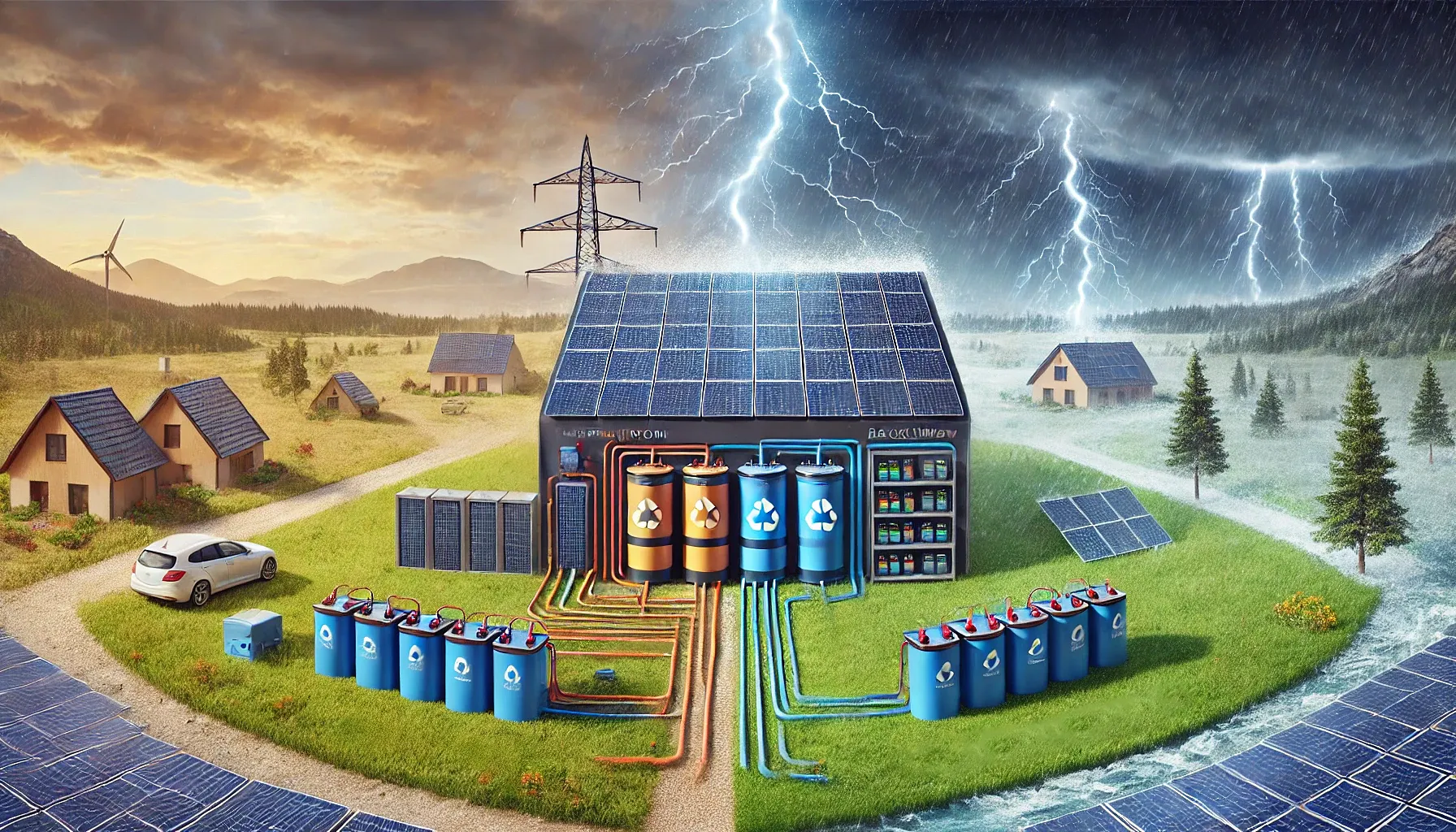
Imagine it’s one of those stormy winter evenings, and suddenly the lights go out. You’re not alone – millions of people have had this experience. But what exactly can you do to prepare for a power outage? In this article, you’ll learn everything about emergency power and backup power, so you’re prepared for the next unexpected grid failure.
The Basics of Power Supply During Grid Failures
Power outages are a common problem affecting many households. Studies show that up to 40% of households in certain regions are affected by power outages. But what exactly does that mean for you? Let’s explore the basics of power supply during grid failures.
Definition of Emergency Power and Backup Power
You have probably heard the terms emergency power and backup power. But what do they mean?
- Emergency power is the energy you need to operate essential devices during a power outage. It is usually the simplest and most cost-effective option.
- Backup power, on the other hand, ensures that your entire home is supplied with electricity even during a grid failure. This requires a special transfer switch.
The choice between these two systems depends on your individual needs. You should ask yourself: “How much energy do I really need in an emergency?”
The Importance of Energy Independence
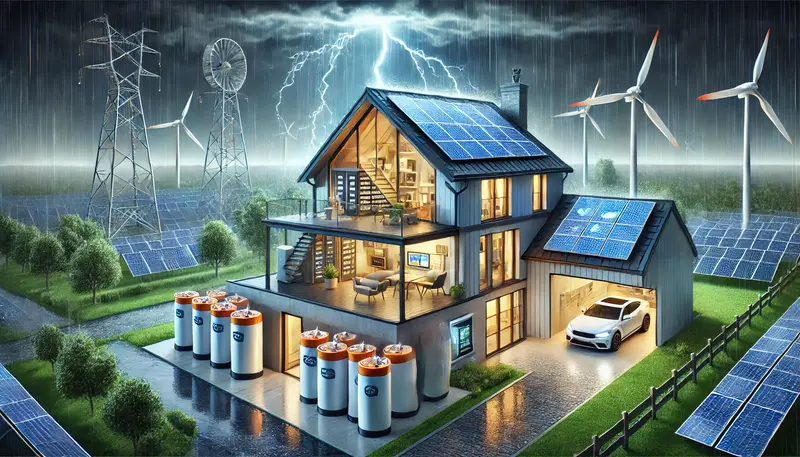
In a world where natural disasters and technical problems can occur at any time, energy independence is crucial. Imagine you are in a storm and the power goes out. What would you do?
With a reliable emergency power system, you can ensure that your most important devices, such as your refrigerator or heating, continue to function. This not only gives you security but also a sense of control.
Examples of Power Outages and Their Effects
Power outages can have various causes. Here are some examples:
- Natural Disasters: Storms, floods, or earthquakes can interrupt the power supply.
- Technical Problems: Sometimes, it’s simply infrastructure failures that lead to an outage.
The effects are often severe. Without electricity, refrigerators cannot cool, heaters cannot function, and communication tools fail. This can be not only inconvenient but also dangerous.
“Preparation is key to keeping your cool during a power outage.” – Energy Expert
It is important to understand that not all solutions are suitable for every application. You must make a conscious choice that fits your needs. Remember that the right preparation can make all the difference.

Differences Between Emergency Power and Backup Power
When it comes to energy supply during a power outage, many face the question: emergency power or backup power? Both systems have their own characteristics and requirements. But what exactly are the differences?
1. Technical Characteristics and Requirements
Emergency power systems are often the simplest and most cost-effective solution. They are typically integrated and primarily supply individual consumers. This often happens via an external socket near the inverter. The maximum power is often 16 amperes. Some manufacturers even offer systems that enable an uninterruptible power supply.
In contrast, a backup power system requires a transfer switch at the grid connection point. This is necessary to completely disconnect the house from the public grid. The requirements for such systems can vary among local grid operators. In the event of a power outage, the system switches over either manually or automatically. This means that you will not be left in the dark even during a prolonged outage.
2. Financial Considerations
An important aspect when choosing between emergency power and backup power is the cost. Emergency power systems typically cost between 500 and 2500 Euros, depending on size and performance. Backup power solutions, on the other hand, start at approximately 2000 Euros. This often makes emergency power the more attractive choice for many households.
Remember that the choice of system can also affect your safety during a power outage.
“Remember that the choice of system can also affect your safety during a power outage.”
3. Selection Criteria for a Suitable System
The choice of system often depends on the critical load that needs to be supplied. Consider which devices you absolutely want to keep running. A refrigerator? A heater? These considerations are crucial for selecting the right system.
In summary, the differences between emergency power and backup power are clear. Emergency power systems are often cheaper and easier to install. Backup power solutions, however, offer more comprehensive options for energy supply.
Pricing Information
Here is an overview of the costs for both systems:
- Emergency power systems: 500 – 2500 Euros
- Backup power solutions: from 2000 Euros
Price is often a decisive factor, but not the only consideration. Consider what is best suited for your situation.
Manufacturers of emergency and backup power systems
When it comes to emergency and backup power systems, there are many providers on the market. Leading brands such as Fronius and SOLAX Power offer a wide range of solutions. But what makes these systems so special? And what trends are emerging in solar power supply?
SolaX Power X3-ULTRA-20K (SPD TYPE LL/AFCI/WIFI+LAN) X3-ULT-20K
By the way, the HUAWEI SmartGuard also offers a very good technical basis here:
Leading Brands and Their Offerings
Companies like Fronius and LG are known for their high-quality products. Fronius emergency power solutions offer up to 4000 watts of power. That is a considerable number! In comparison, systems from Solax start at 1 kW and go up to 10 kW. What does this mean for you?
- Fronius: Up to 4000 watts of power
- Solax: Systems from 1 kW to 10 kW
The technical equipment varies from manufacturer to manufacturer. Therefore, it is important to compare the best options. Have you ever considered which system best suits your needs?
Future Trends in Solar Power Supply
The future looks promising. More and more companies are entering the market and producing innovative systems.
“Technology is constantly evolving, and it’s important to stay up-to-date.” – Industry Analyst
This shows that you should not only pay attention to the big names. New market entrants also have a lot to offer.
Comparison of Providers Based on Functionality
A comparison of features can help in choosing the best system. What are the decisive factors? Here are some considerations:

Matthias Schiestl and his team are always ready to help you reliably and quickly with any questions and with how you can use the devices reliably and efficiently in your everyday life. » learn more about us
+43 676 88731200 9 AM - 12 PM weekdays info@pv-24.at
- Maximum Power: How much power do you need?
- Flexibility: Can the systems be adapted to your needs?
- Cost: What is your budget?
A smart comparison can help you make the right decision. And remember: choosing the right system can be crucial when it comes to energy supply in crisis situations.
Here is an overview of the performance of the different systems:
- Fronius Emergency Power Solutions: up to 4000 Watts
- Solax Systems: from 1 kW to 10 kW
Choosing the right emergency power or backup power system is crucial. You should carefully weigh the different options. After all, it’s about your energy supply when you need it most.

Special features such as ‘Backup Power Light’
What is Backup Power Light?
Backup Power Light is a simplified version of the conventional backup power system. It allows you to supply selected circuits in the event of a power outage. This often happens uninterruptedly. That sounds practical, doesn’t it? The inverters in this category have a special backup or EPS connection. This connection makes installation easier. You no longer have to install complicated switching devices.
Usage and advantages compared to conventional backup power
The biggest advantage of Backup Power Light is its simple installation. It requires less complex requirements. This means you have to invest less time and money. Typically, these systems cost between 700 and 1500 Euros. This is an attractive option for many consumers seeking high-quality, yet cost-effective power supply.
- Simplicity: Installation is straightforward.
- Cost-efficiency: Lower costs compared to conventional backup power.
- Flexibility: Ideal for households with basic power supply needs.
Conventional backup power systems often require complex switching. With Backup Power Light, you can connect the circuits directly to the device. Alternatively, you can install sockets connected to the port. This makes usage even simpler.
Suitable Applications for Backup Power Light
If you are a homeowner with basic power supply needs, Backup Power Light could be the ideal solution for you. It is particularly suitable for:
- Households that regularly need power.
- Smaller appliances such as refrigerators or lighting.
- Areas where power outages are frequent.
“Backup Power Light can be an excellent solution for households that require regular electricity but do not want to invest too much.” – Solar Consultant
With Backup Power Light, you have the option to continue operating your most important devices in an emergency. This provides you with security and peace of mind. It is a solution that proves valuable for many.
In summary, access to high-quality yet cost-effective power supply is an attractive option for many consumers. So, if you are considering how to secure your power supply in an emergency, Backup Power Light might be exactly what you are looking for.
A very good product example:
HUAWEI SmartGuard-63A-T0 Backup Box 3-phase Emergency Power Transfer Box
Terms and synonyms from different manufacturers simply explained
-
Hybrid inverter with emergency power function – A device that converts solar energy into usable electricity and also ensures an emergency power supply in the event of a power outage. It combines the functions of a conventional solar inverter with those of a battery inverter.
-
Backup Box – An additional device for solar power systems that connects to an inverter and controls the power supply from the battery in the event of a power outage.
-
Backup Switch – A switch that automatically transfers from grid power to emergency power as soon as a power outage is detected.
-
Backup Controller – A control unit that monitors and regulates energy flows in a solar power system, especially regarding the switching and control of the backup power supply.
-
Emergency Power Transfer Switch – The process or system that automatically switches the power supply from the main power source to an emergency power source in the event of a power outage.
-
Transfer Device – A technical device or system that can switch between two or more power sources, usually between the public grid and an emergency power source.
-
Grid Transfer Switch – A switch that alternates between power supply from the public grid and the local power grid (e.g., a solar power grid with battery backup). This is typically used in systems that require seamless switching.
-
Energy Management System (EMS) – A system that controls and optimizes the generation, storage, and consumption of energy in a building or facility. It can be an integral part of a hybrid inverter with backup power function.
-
Island Mode – An operating mode of hybrid inverters where the system operates independently of the public power grid. Often used as a synonym for autonomous operation during power outages.
-
AC Coupler – A device used to connect an AC power source (e.g., an existing solar inverter) to a battery storage system, often used in conjunction with backup systems.
-
Smart Grid-Ready – Refers to devices that are prepared for connection and operation in smart grids. They can react to signals from the power grid and adjust their operation accordingly.
-
Load Shedding – A procedure in which non-essential loads in a household or business are automatically switched off to secure the power supply of critical systems during an emergency.
-
Feed-in Management – The control of feeding generated energy (e.g., solar power) into the public grid, often regulating the maximum feed-in quantity, especially in cases of grid overload or other technical requirements.
Tips for Choosing the Best System for Your Needs
Choosing the right energy system can be overwhelming. Where do you start? First, it’s important to analyze your needs and energy consumption. You should know exactly how much energy you need. This means you must keep an eye on your current and future energy costs. Consider which devices you use daily and how much energy they consume. Do you perhaps have plans to use more electrical devices in the future? These considerations are crucial.
Future-Oriented Considerations for Stellar Solar Solutions
When you are considering solar energy, it is important to plan with the future in mind. Imagine installing a system that not only meets your current needs but also accounts for future requirements. This could mean choosing a system that is expandable or supports new technologies. Have you ever thought about how your energy needs might change in five or ten years?
Another aspect is to obtain advice from various providers. There are many providers on the market, and each has its own strengths and weaknesses. Take the time to review different options so you can find the best solution. An expert in renewable energies says:
“Take the time to review different options so you can find the best solution.”
This is not only wise advice but also a way to save money.
Long-Term Savings Through Systematic Selection
A systematic approach to system selection can help save costs in the long run. It is essential to focus on your own needs and household supply. In Germany, sustainable energy sources account for up to 46% of all new photovoltaic installations. This shows that more and more people are opting for renewable energies.
A well-informed decision can not only save money but also improve and promote your lifestyle. You will not only live more environmentally friendly but also become independent of rising energy prices. That sounds appealing, doesn’t it?
In summary, choosing the best system for your needs requires thoughtful planning. Analyze your energy consumption, think about the future, and seek advice from various providers. If you follow these steps, you will be well on your way to making the right decision. Take advantage of the opportunities that renewable energies offer you and take the first step towards a sustainable future.