

In recent months, German news has frequently focused on the challenges and opportunities associated with the new Solar Peak Law. But what exactly does this mean for us as operators of solar and PV systems? There are many questions, and today I would like to summarize the most important aspects that every operator should know.
Introduction to the Solar Peak Law
What is the Solar Peak Law (EEG EnWG 2025)? It is a new regulation intended to govern the feeding of solar power into the public grid. But why is this necessary? The answer lies in the challenges the market currently faces. Negative electricity prices are a major problem for grid stability. The law aims to address these issues and promote the integration of renewable energies.
Background and Reason for Introduction
The Solar Peak Law is clearly a response to current market challenges. In recent years, there have been recurring periods of negative electricity prices. This means that PV system operators do not receive feed-in tariffs during these times.
Last year, for example, there were 457 hours with negative prices.
The law aims to regulate the feed-in of solar power and relieve the burden on the grids.
Another reason for the introduction of the law is the need to improve grid stability. By introducing smart meters and regulating feed-in, it is intended to ensure that PV system operators are not unnecessarily compensated for their electricity when feed-in is too high.
Expected Changes for PV System Operators
What does this mean specifically for you as an operator of a PV system? Here are some of the most important changes you can expect:
- Introduction on April 1, 2025 (Module 2 EnWG applies from April 1): The new regulations will come into force on this date.
- Module 1: The so-called Solar Peak Law (actually: Law to Amend Energy Industry Law to Avoid Temporary Generation Surpluses) originally came into force on February 25, 2025.
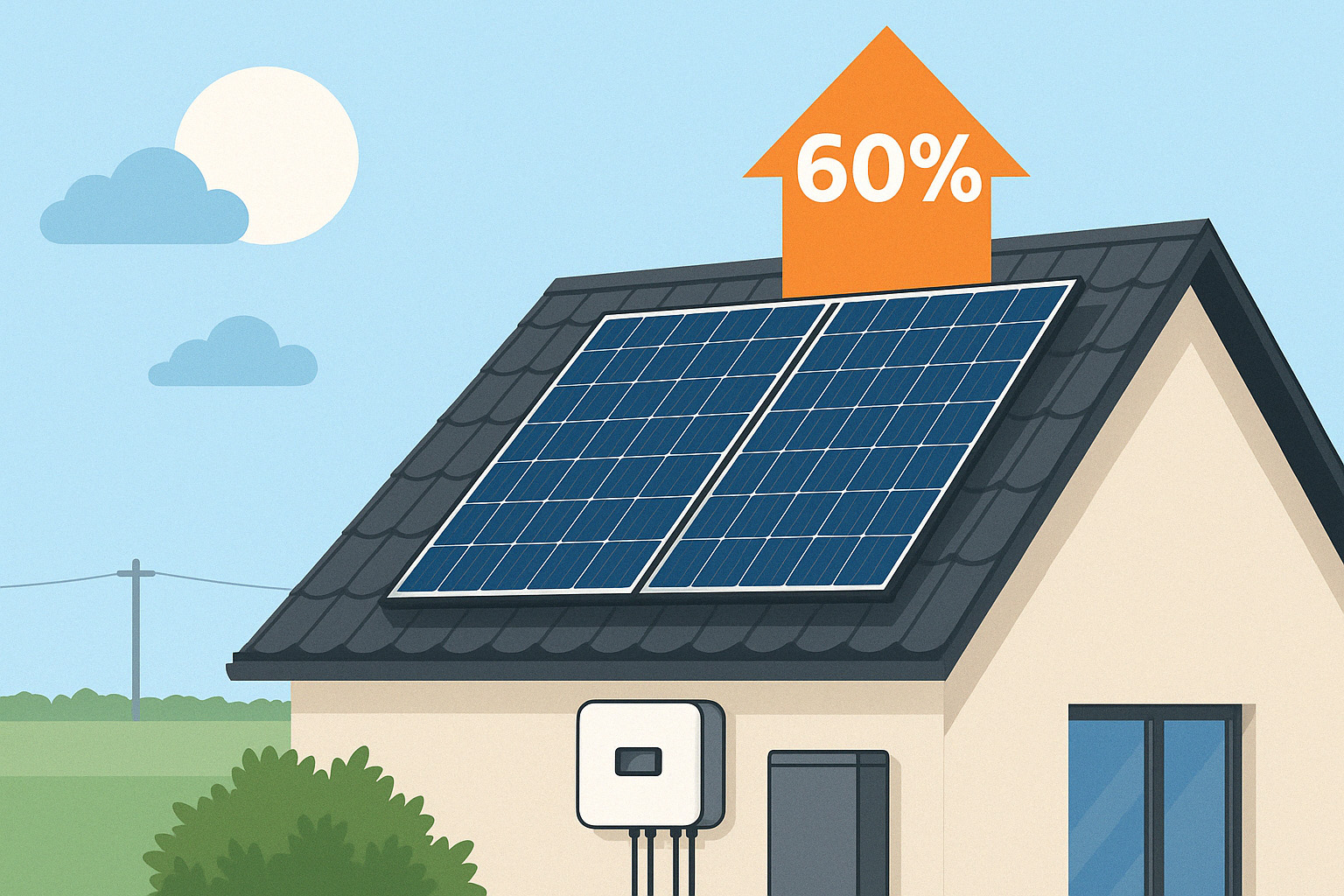
- 60% Curtailment for New Systems: New PV systems may only feed 60% of their installed capacity into the grid.
- Expected Introduction of Smart Meters by End of 2025: These meters will help you better manage your electricity consumption and benefit from dynamic grid fees.
These changes are profound and can have significant effects on your feed-in tariff. You should therefore inform yourself well and, if necessary, make adjustments to your system.
The Role of Smart Meters
Smart meters play a crucial role in the new law. They enable real-time monitoring and adjustment of electricity consumption. If you have a smart metering system, you are not affected by the 60% curtailment. This could help you maximize your feed-in tariff.
The introduction of these systems is expected by the end of 2025. It is important to prepare for this and, if necessary, invest in the required technology. Yes, the acquisition costs can be high, but the long-term savings could justify the investment.
Summary of Key Points
In summary, the Solar Peak Act brings profound changes for all PV system operators. Here are the key points summarized again:
- The law regulates the feeding of solar power.
- It aims to improve grid stability.
- Operators without an intelligent metering system must expect a 60% curtailment.
- Smart meters will be introduced by the end of 2025.
“The Solar Peak Act is clearly a reaction to the current challenges of the market.”
The new regulations offer both challenges and opportunities. You should inform yourself well and consider how you can adapt your PV system to benefit from the new regulations.
Visualization of Changes
Introduction of the Solar Peak Act
- Introduction on April 1, 2025
- 60% curtailment for new installations
- Expected introduction of smart meters by end of 2025
This information is crucial to understanding the impact of the Solar Peak Act on your PV system. Stay informed and adjust your strategies accordingly.
Advantages and Disadvantages of the New Regulations
The new legislation brings significant changes for operators of photovoltaic systems (PV systems). It introduces dynamic grid fees, which have both advantages and disadvantages for operators. Let us examine the key points in more detail.
Advantages: Savings Potential through Dynamic Grid Fees
A central advantage of the new regulations is the dynamic grid fees. These allow you to significantly save energy costs through targeted control of your electricity usage. How much can you save? According to current estimates, savings of up to 30% are possible. That sounds tempting, doesn’t it?
A well-utilized smart metering system can significantly reduce costs. It offers you the opportunity to monitor and adjust your electricity consumption in real time. For example, you can run your appliances when electricity prices are low. This is not only economical but also environmentally friendly.
Disadvantages: Curtailment and Loss of Remuneration
However, not everything is rosy. There are also significant disadvantages that you should consider. An important point is curtailment. This particularly affects new installations. Operators who have not installed a smart metering system must note that they may fall under the curtailment regulation. This means that only 60% of their installed capacity may be fed into the grid.
Additionally, there is the loss of remuneration during negative electricity prices. In times when prices fall into negative territory, operators receive no feed-in tariff. This can lead to potential losses of €100-150 annually per installation. A real disadvantage that can affect your profitability.
The Impact on Operators
Dynamic grid fees can lead to a reduction in electricity costs. However, curtailment could affect the profitability of new installations. You must therefore weigh whether the savings from dynamic grid fees outweigh the potential losses from curtailment and loss of remuneration.

Matthias Schiestl and his team are always ready to help you reliably and quickly with any questions and with how you can use the devices reliably and efficiently in your everyday life. » learn more about us
+43 676 88731200 9 AM - 12 PM weekdays info@pv-24.at
Imagine you have installed a PV system, but due to curtailment, you can only feed a portion of your energy into the grid. This can be frustrating, especially when you know you could produce more. The question is: Is investing in a smart metering system the solution to this problem?
Conclusion of the New Regulations
The new legislation introduces dynamic grid fees, which bring both advantages and disadvantages for operators. It is important that you inform yourself well and make the best decisions for your situation.

The Importance of Smart Metering Systems for the Future
In today’s world, where the energy transition is gaining increasing importance, smart metering systems are a central topic. But why are they so important? And what advantages do they offer for consumers and operators of photovoltaic systems? Let us examine these questions in more detail.
Obligation to Use Smart Meters
The transition to smart meters is not just a technical innovation, but a necessity. As of April 1, 2024, the new Energy Industry Act will come into force. This law requires the use of smart metering systems to fully leverage the benefits of the new law. You might be wondering what this means for you?
- Currently, 500,000 smart meters are already installed in Germany.
- The goal by 2025 is 3 million smart meters.
This means that many households and businesses will soon have to switch to smart meters. These meters allow real-time monitoring and control of electricity consumption.
“Smart meters enable flexible energy management and optimize self-consumption.”
This is particularly important considering that energy prices can fluctuate.
No matching products found.
Benefits of Storage Options and Grid-Friendly Consumption
Another crucial aspect is grid-friendly consumption. What does that mean? It’s about managing electricity consumption to align with energy generation. For example, if you own a photovoltaic system, you can use the generated electricity directly or store it in a battery. The integration of storage into the energy supply is key to efficiency.
“The integration of storage into the energy supply is key to efficiency.”
By utilizing PV solar power storage options, you can not only reduce your energy costs but also contribute to the stability of the power grid. If all consumers adapt their electricity consumption to generation, the entire system becomes more efficient. But how can you achieve this?
- Install a smart metering system.
- Use storage solutions to store surplus electricity.
- Actively manage your consumption to benefit from favorable electricity prices.
These measures are not only good for your wallet but also for the environment. Grid-friendly consumption will be crucial in the future. By actively participating in the energy transition, you help reduce dependence on fossil fuels.
No matching products found.
The Role of Smart Meters in the Energy Industry
Smart metering systems are a central component of the innovation strategy in the energy industry. They enable grid operators to monitor electricity consumption in real time and react better to fluctuations. This is particularly important considering that in the past there have been 457 hours during which negative electricity prices occurred. During these times, operators without a smart metering system do not receive feed-in tariffs.
The new regulations not only promote the integration of renewable energies but also help citizens actively contribute to the energy transition. If you have a smart metering system, you are not affected by the 60% curtailment. This means you can feed all your generated energy into the grid.
In summary, the transition to smart meters and the use of storage options are crucial for the future of energy supply. They not only offer you financial benefits but also contribute to the stability of the power grid. It is time to take action and utilize the opportunities that smart metering systems offer you. The future of energy supply is in your hands.
A good article with a lot of information and details:
www.solarwirtschaft.de/unsere-themen/photovoltaik/standpunkte/faq-solarspitzengesetz/
Questions: We are happy to advise you!