









Within two weeks, the price of diesel in Austria has almost doubled. The escalation in the Middle East directly affects millions of motorists at the pump and raises a central question.
The charging costs for electric cars are coming into sharper focus than ever before in view of exploding fuel prices. While diesel drivers currently pay around 2.50 euros per liter at the pump, the electricity costs for an electric car are on a completely different level. Especially those who charge at home or use their own solar system drive for a fraction of the cost. At PV-24, we observe daily how the increasing demand for wallboxes and PV solutions is related to the price jumps at petrol stations. This article provides you with a fact-based comparison of current charging and fuel costs and shows how you can permanently reduce your mobility costs.
Why fuel prices exploded in March 2026
The Persian Gulf crisis and the global oil market
The military escalation in the Middle East has plunged the global oil market into an unprecedented crisis. Around 20% of the world’s oil production from Saudi Arabia, the United Arab Emirates, Iraq, and Kuwait is transported through the Strait of Hormuz. After numerous shipping companies ceased shipping through this strategically important strait, the Brent crude oil price, which is decisive for Europe, rose by around 16% within a few days.
This increase in crude oil prices directly affects fuel prices at petrol stations. Unlike previous oil price peaks, there is currently no rapid easing in the market. The geopolitical situation in the Persian Gulf remains tense, and a short-term normalization of transport routes is not foreseeable.
Current diesel and petrol prices in Austria
In Austria, the price of diesel almost doubled within just two weeks, from around 1.50 euros to about 2.50 euros per liter. Super 95 climbed to around 2 euros per liter in the same period. A 50-liter tank of diesel thus costs around 125 euros instead of the previous 75 euros.
As a countermeasure, the Austrian federal government has announced the release of strategic oil reserves to reduce the liter price by about 10 cents. For frequent drivers with diesel vehicles, however, this changes little about the basic situation. The energy costs for fossil mobility remain at a historically high level, and an end to the crisis is not in sight.
What charging an electric car really costs per 100 kilometers
Charging costs at home wallbox
The cheapest way to charge an electric car is via your own wallbox at home. With an average household electricity price of 0.30 to 0.34 euros per kWh and a typical vehicle consumption of 19 kWh per 100 kilometers, the e-car charging costs are around 6 to 6.50 euros per 100 km. Those who use a special car electricity tariff can further reduce costs by up to 25%.
Compared to current diesel costs of around 15 euros per 100 kilometers, this means a saving of more than half. Even with higher consumption of 22 kWh per 100 km, the charging costs for an electric car remain significantly below the diesel level at around 7.50 euros.
Prices at public charging stations and fast chargers
At public AC charging stations, you pay between 0.40 and 0.50 euros per kWh. This means the cost for 100 kilometers is around 8 to 9.50 euros. At DC fast chargers with prices of 0.50 to 0.69 euros per kWh, you will pay 9.50 to 13 euros per 100 km.
Without a contract or at motorway charging stations, prices of over 0.80 euros per kWh are possible. In this case, electric car charging costs approach the current diesel price. Regular fast charging without a fixed tariff is thus the most expensive way to operate an electric car. Your own wallbox remains the clearly most economical solution for everyday use.
E-car charging costs vs. diesel and petrol in direct comparison
How big is the saving with an electric car under current market conditions? The following table compares the pure energy costs per 100 kilometers for various drives and charging scenarios.
| Powertrain and Charging Scenario | Consumption | Energy Price | Cost per 100 km |
|---|---|---|---|
| Diesel | 6 L/100 km | 2.50 Euro/L | ~15.00 Euro |
| Super 95 | 7.5 L/100 km | 2.00 Euro/L | ~15.00 Euro |
| EV Home Charging | 19 kWh/100 km | 0.34 Euro/kWh | ~6.46 Euro |
| EV Public AC | 19 kWh/100 km | 0.45 Euro/kWh | ~8.55 Euro |
| EV DC Fast Charging | 19 kWh/100 km | 0.69 Euro/kWh | ~13.11 Euro |
| EV Own Solar Power | 19 kWh/100 km | ~0.08 Euro/kWh | ~3.00 Euro |
The figures show a clear result. Those who charge their electric car at home with a wallbox drive for less than half the current diesel costs. When charging with one’s own solar power, charging costs even drop to around 3 euros per 100 km. This corresponds to one-fifth of what diesel drivers currently pay at the pump.
Even expensive DC fast charging on the highway, at around 13 euros, is still below the current diesel price of 15 euros. In every single scenario, the electric car performs better than the internal combustion engine in terms of pure energy costs.
Driving for around 3 euros per 100 kilometers with your own solar system
Self-consumption instead of expensive grid electricity
Anyone who has their own photovoltaic system on the roof can charge their electric car with self-generated electricity. The actual costs correspond to the forfeited feed-in tariff and, depending on the tariff, range from 6 to 14 cents per kWh. With a consumption of 19 kWh per 100 kilometers, this results in charging costs of only 1.14 to 2.66 euros.
If the full costs of the PV system are converted to the kilowatt-hour generated, the electricity generation costs range between 8 and 12 cents per kWh. The charging costs for electric cars thus remain at around 2 to 3 euros per 100 km. No fossil fuel drive can compete with these values, especially given current oil prices.
Optimally combine wallbox and solar power
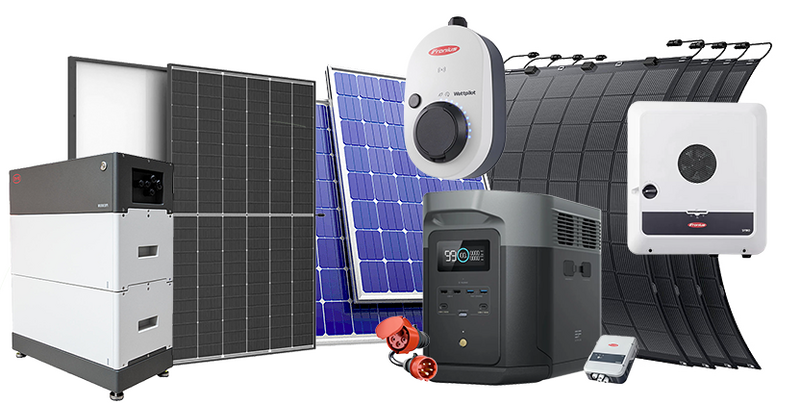
The combination of photovoltaic modules and a wallbox enables so-called PV surplus charging. The vehicle is specifically charged when the solar system produces more electricity than the household is currently consuming. Those who direct this surplus into the car instead of feeding it into the grid maximize the financial benefit of their system.

Matthias Schiestl and his team are always ready to help you reliably and quickly with any questions and with how you can use the devices reliably and efficiently in your everyday life. » learn more about us
+43 676 88731200 9 AM - 12 PM weekdays info@pv-24.at
A solar system with storage extends this principle by allowing solar power to be used for charging in the evening or at night. For tenants or owners without a large roof area, a balcony power plant with storage offers an affordable entry into self-generated electricity. Even if the generated amount is smaller, every self-produced kilowatt-hour noticeably reduces electric car charging costs.
Which factors influence electric car charging costs
Electricity tariff, charging location, and charging power
The biggest cost lever when charging an electric car is the electricity tariff. The price difference between the cheapest household tariff and a roaming tariff on the highway can be more than double. AC charging at home or at work is almost always cheaper than DC fast charging on the go.
Billing models also play a role. Some providers bill by kWh, others by charging time or with mixed models. A flat minute rate can disproportionately increase the actual costs per kWh at slow charging stations. Those who regularly charge publicly should therefore choose a fixed charging tariff with transparent kWh billing.
Vehicle consumption and driving behavior
The electricity consumption of an electric car varies considerably depending on the model. Compact city vehicles manage with 14 to 17 kWh per 100 km, while large SUVs can consume 22 to 25 kWh. The difference in charging costs can amount to several euros per 100 kilometers.
In addition to the vehicle type, driving behavior also significantly influences consumption. High speeds on the highway, cold temperatures in winter, and heavy use of heating or air conditioning increase energy demand. Anticipatory driving and the use of recuperation, on the other hand, measurably reduce consumption and thus also the cost per kilowatt-hour charged.
Annual costs compared for 15,000 kilometers
What do the different per-kilometer costs mean when extrapolated to a whole year? With an average mileage of 15,000 kilometers, the cost difference between the drive types becomes particularly clear.
| Drive type and charging scenario | Cost per 100 km | Annual costs (15,000 km) | Savings vs. diesel |
|---|---|---|---|
| Diesel (2.50 euros/L) | ~15.00 euros | ~2,250 euros | – |
| Super 95 (2.00 euros/L) | ~15.00 euros | ~2,250 euros | 0 euros |
| EV home charging | ~6.46 euros | ~969 euros | ~1,281 euros |
| EV public AC charging | ~8.55 euros | ~1,283 euros | ~967 euros |
| EV solar power | ~3.00 euros | ~450 euros | ~1,800 euros |
An electric car driver who charges at home with a wallbox saves around 1,280 euros per year compared to a diesel car. Those who charge with their own solar power even keep around 1,800 euros more in their pocket. This saving in pure energy costs becomes even more significant the longer the current high-price phase for fossil fuels continues.
In addition, electric car owners benefit from lower maintenance costs. No oil changes, less brake wear due to recuperation, and an overall less maintenance-intensive drivetrain make electric cars cheaper to run, even beyond charging costs.
Long-term price development of electricity and fossil fuels
Why electricity prices remain more stable than oil prices
Fossil fuels are subject to strong and hardly predictable price fluctuations. Geopolitical conflicts, OPEC production quotas, and speculation on the commodity market can change the oil price by double-digit percentage points within a few days. The current crisis in the Persian Gulf exemplifies how quickly diesel prices can double.
Electricity from renewable sources is largely decoupled from these factors. Wind and sun do not incur ongoing fuel costs and are not dependent on geopolitical transport routes. With every expansion of renewable capacities, the electricity price level further stabilizes. In Austria, the share of renewable energies in electricity generation recently exceeded 80%, making the domestic electricity market less susceptible to international crises.
You become even more independent with your own PV system and a battery storage system. Those who generate and store their own electricity are almost completely decoupled from tariff fluctuations and rising grid fees. The investment costs of a solar system amortize faster than ever with current energy prices.
Practical tips for particularly low electric car charging costs
Choosing the right electricity tariff and charging infrastructure
The first step to low electric car charging costs is choosing the right tariff. Special electric vehicle tariffs often offer lower kWh prices than the regular household tariff. Comparing available offers is particularly worthwhile for frequent drivers with high monthly charging needs.
For home charging, a permanently installed wallbox with a Type 2 charging cable is recommended. Compared to a household socket, an 11 kW wallbox not only charges significantly faster but also more efficiently. The lower charging losses further reduce the actual costs per charged kilowatt-hour.
Utilizing solar power specifically for charging
The most effective way to minimize electric car charging costs is through the combination of your own PV system and a wallbox. With an energy management system, PV surplus charging can be fully automated. The system detects when sufficient solar power is available and starts the charging process independently.
Please feel free to contact us by phone, WhatsApp, or chat if you would like individual advice on the right combination of wallbox, PV system, and storage. With the correct configuration, you can permanently reduce your charging costs to a minimum and become independent of price peaks at the pumps.
Conclusion
The current oil crisis makes the cost advantage of electric cars clearer than ever before. While diesel drivers currently pay around 15 euros per 100 kilometers, electric car drivers can manage with just under 6.50 euros when charging at home. Those who charge with their own solar power drive for around 3 euros per 100 km. Over a year, for 15,000 kilometers, this results in savings of up to 1,800 euros in energy costs alone. The combination of a wallbox, PV system, and intelligent charging management offers the most effective protection against volatile fuel prices and makes your mobility permanently more affordable.