










Imagine standing in your garden as the sun rises and your new solar panels gleam. This is the moment you decide how you want to use your solar energy. The inverter is the heart of your photovoltaic system. But how do you choose the right one?
Let’s dive into the world of inverters together and discover the best options for your needs!
What is an inverter and why is it important?
An inverter is one of the central components in a photovoltaic system. But what exactly is an inverter? And why is it so important for your energy system?
Definition and function of an inverter
An inverter is a device that converts direct current (DC) into alternating current (AC). But why is this necessary? Most household appliances require AC to function. Without an inverter, you would not be able to use the energy generated by your solar panels.
Conversion of direct current to alternating current
The conversion of direct current to alternating current is achieved through various technologies. The inverter ensures that the energy generated by the solar panels is converted into a form that is usable for your home. This is crucial, because without this conversion, the energy remains unused.
The central role of an inverter in the PV system
The inverter plays a crucial role in your photovoltaic system. It is not only responsible for the conversion but also for monitoring energy production. A well-functioning inverter maximizes the yield of your system.
“The inverter is the heart of every photovoltaic system.”
Difference between hybrid and standard inverters
There are two main types of inverters: standard inverters and hybrid inverters. Standard inverters simply convert direct current into alternating current. Hybrid inverters, on the other hand, can also convert direct current into storage. This means that you can store the energy you do not use immediately. This significantly increases the efficiency of your energy conversion.
- Standard Inverter: Converts direct current into alternating current.
- Hybrid Inverter: Converts direct current into alternating current and stores surplus energy.
Influence of the Inverter on Energy Efficiency
The efficiency of an inverter has a direct impact on the yield of your photovoltaic system. An efficient inverter ensures that as much of the generated energy as possible is utilized. This means that you have to draw less energy from the grid, thus saving costs.
In summary, the inverter is a very central component for your photovoltaic system. You should be well informed about the types of inverters available and what you need to consider to make the best choice.
| Inverter type | Function | Advantages |
|---|---|---|
| Standard inverter | Convert direct current into alternating current | Simple and cost-effective |
| Hybrid inverter | Convert and store direct current into alternating current | Increased efficiency and backup power supply |

The Different Types of Inverters
When you delve into the world of photovoltaic systems, you will quickly encounter the term inverter. But what exactly is an inverter? It converts the direct current (DC) generated by your solar modules into alternating current (AC), which is used in your household.
There are different types of inverters, and each has its own advantages and disadvantages. Let’s take a look.
1. Standard String Inverters
The standard string inverter is the most commonly used type. It is typically used in larger systems. These inverters are easy to install and cost-effective. They are ideal for roofs with a uniform orientation and no shade. But what happens if part of the roof is shaded? Exactly, the performance can decrease. This is a disadvantage you should consider.
2. Hybrid Inverters and Their Advantages
A hybrid inverter is an interesting option. It can not only convert direct current into alternating current but also redirect direct current directly to a storage unit. This means you can store your surplus energy to use it later. This significantly increases the efficiency of your system. So, if you are looking for a solution that gives you more control over your energy consumption, a hybrid inverter could be the right choice for you.
3. Microinverters – A Trade-off?
What about microinverters? These small devices are installed directly on each solar module. They offer individual monitoring and can optimize the performance of each module. That sounds good, doesn’t it? But they are also more expensive and require more installation effort. Is it worth it? That depends on your specific needs.
4. Low Volt Inverters – What to Look Out For?
When working with low-voltage inverters, there are a few things to consider. These inverters are specifically designed for systems with lower voltages. Ensure that your battery storage is also suitable for this voltage. An example is the Victron system. It is important that all components of your system work together harmoniously.
5. Popular Brands: Fronius, Huawei, SolaX Power, SolarEdge
When choosing an inverter, the brands are also crucial. Fronius,Huawei,SolaX Power, and SolarEdge are some of the most well-known manufacturers. They offer different models with various features and efficiencies. It is worthwhile to compare the individual offerings and see which ones best suit your needs.
Each inverter type has specific uses and applications. It is important that you understand your individual requirements before making a decision. And remember: choosing the right inverter can make all the difference in the efficiency of your photovoltaic system.
Example products:
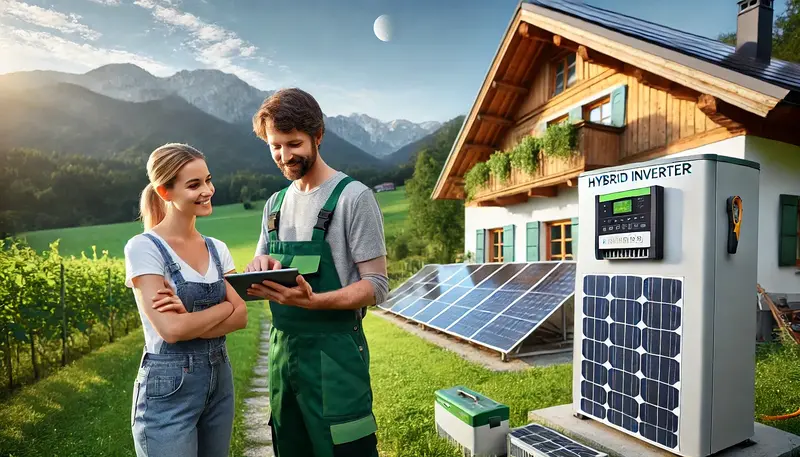
SolarEdge SE10K-RWS48BEN4 SE10K-RWS Storedge Hybrid Inverter
Hybrid Inverters – More Efficient for Power Usage?
How a Hybrid Inverter Works
A hybrid inverter is a true multi-talent. It converts the direct current generated by your solar modules into alternating current. What’s special? It can also convert the direct current directly into a storage unit. This means you can not only use the generated energy immediately but also store it for later. This significantly increases the efficiency of your power usage.
Advantages of DC Conversion to a Storage Unit
The conversion of direct current into storage has many advantages:
- Flexibility: You can use the energy whenever you need it.
- Cost-efficiency: You save money by having to draw less electricity from the grid.
- Environmental friendliness: You use the renewable energy that you generate yourself.
Imagine you have a sunny day. Your solar system produces a lot of electricity. With a hybrid inverter, you can store the excess electricity and use it on cloudy days or at night. Isn’t that practical?
Distinction from Standard Inverters
What distinguishes a hybrid inverter from a standard inverter? A standard inverter merely converts direct current into alternating current. It has no way to store energy. This means that in the event of a power outage or during periods of low solar radiation, you are dependent on the power grid. A hybrid inverter, on the other hand, offers you more independence.
Examples of Hybrid Models and Their Performance
There are many different hybrid inverters on the market. Some well-known models include:
- Fronius Symo Hybrid: Ideal for larger households with high energy demand.
- Kostal Plenticore: Flexible and adaptable for various storage sizes.
- Victron Energy: Particularly suitable for off-grid applications.
Each model has its own strengths and weaknesses. It is important to consider your individual needs.
Power Outage Protection with the Right Setup
Another major advantage of a hybrid inverter is power outage protection. With the right setup, you can power your entire home during a power outage. This gives you a sense of security. Imagine there’s a power outage and you’re the only one in the neighborhood with lights on!
To maximize the efficiency of your system, system compatibility is crucial. The hybrid inverter should work optimally with your storage unit and other household devices. Only then can you fully exploit the benefits.
Matthias Schiestl and his team are always ready to help you reliably and quickly with any questions and with how you can use the devices reliably and efficiently in your everyday life. » learn more about us
+43 676 88731200 9 AM - 12 PM weekdays info@pv-24.at
In summary, hybrid inverters represent an excellent solution for modern energy supply. They offer not only the possibility of converting but also storing energy. This makes them an attractive choice for anyone looking to optimize their electricity usage.
Performance and Functional Differences Between Inverters
If you are considering purchasing an inverter, it is important to understand the performance differences to understand. Inverters are not all the same. They differ in their ability to generate and manage electricity. But how exactly do they differ in terms of performance?
How do inverters differ in performance?
The performance of an inverter is measured in watts. Some models are designed for smaller systems, while others can support large photovoltaic systems. You should consider how much energy you need. For example, if you have a small house with low electricity consumption, a small inverter might suffice. However, for larger households or commercial applications, a more powerful model is required.
Backup power capability and its implementation
Another important aspect is backup power capability. “Some inverters can be made fully backup power capable with an extension.” This means they can supply your home with energy in the event of a power outage. This is particularly important if you live in a region frequently affected by power outages. You should check whether the inverter you choose supports this function and what additional components are needed.
Importance for individual energy production
The choice of the right inverter also affects your individual energy production. An efficient inverter can significantly increase the amount of solar energy you generate and use. For example, if you use a hybrid inverter that converts DC to AC and also feeds into a storage unit, you can optimize your energy use. This not only increases efficiency but also your independence from external electricity providers.
Selection criteria based on your consumption
When choosing an inverter, you should also consider your consumption. How much electricity do you consume daily? Do you have electrical appliances that require a lot of energy? These questions will help you choose the right inverter. It is advisable to make a list of your appliances and check their energy consumption. This way, you can ensure that the inverter meets your needs.
Adaptation to future needs and technologies
Technology is constantly evolving. Therefore, it is important that your inverter is adaptable. Perhaps you plan to buy an electric car or expand your solar system in the future. A flexible inverter can adapt to these changes and help you manage your energy efficiently. Consider what technologies might come onto the market in the next few years and whether your inverter is compatible with them.
Choosing the right inverter increases long-term efficiency.
Remember that changes in your living situation can alter your inverter needs. Inform yourself well and choose wisely!

Prerequisites and Costs for Inverter Installation
If you are considering installing an inverter, it is important to understand the costs and prerequisites precisely. What does an inverter and its installation cost? And what financing options are available? Let us clarify these questions together.
1. What do an inverter and its installation cost?
Inverter prices can vary significantly. On average, the price range for inverters is between 1,000 and 2,500 Euros. But that’s not all. Installation also has its price. Additional costs may arise here, which you should include in your planning.
2. Financing options and government subsidies
Good news: There are numerous financing options and government subsidies that can help you reduce costs. Potential savings through government subsidies can amount to up to 30%. This makes entering the use of renewable energies significantly easier.
3. What to consider during planning
When planning your photovoltaic system, you should consider a few things:
- The size of your house and your energy needs.
- The type of inverter you need.
- The option to install a hybrid inverter, which operates more efficiently.
A hybrid inverter has the advantage that it can convert direct current from solar modules into alternating current, and also directly convert direct current into a storage unit. This increases the efficiency of your system.
4. Additional costs for installation and other accessories
In addition to the cost of the inverter itself, you should also consider installation costs and any accessories. These can vary depending on the provider and the complexity of the installation. It is advisable to obtain several quotes.
5. How to maximize long-term savings
The initial investment can be offset by savings in energy costs. Consider how you can maximize your energy efficiency. For example, use the option to combine your inverter with a storage system. This way, you can use your own electricity whenever you need it.
| Cost factor | Amount |
|---|---|
| Average price range for inverters | 1,000 – 2,500 euros |
| Potential savings through government subsidies | up to 30% |
Keep in mind that choosing the right inverter is crucial. Inform yourself well about the different models and their functions. And this is the advantage of a hybrid inverter: it is significantly more efficient.
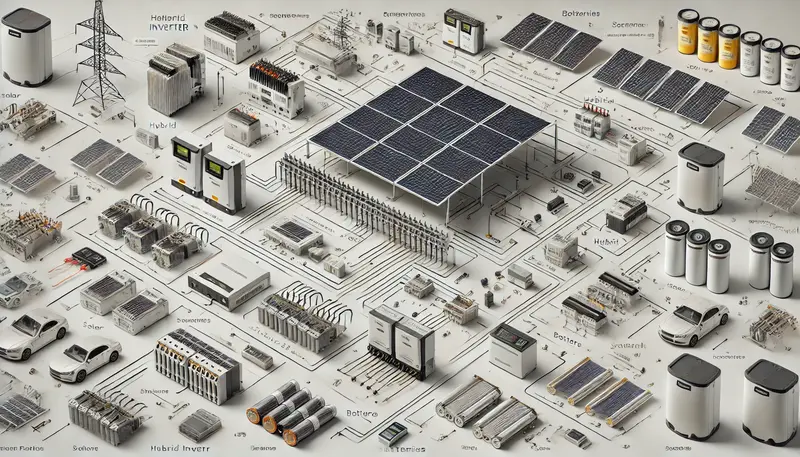
Optimal Integration – Which Components Are Important?
If you are planning or already operating a photovoltaic system, the integration of the various components is crucial. But what exactly does that mean? Let’s go through the most important aspects.
1. Synergy between Inverter and Other Systems
The inverter is the heart of your photovoltaic system. It converts the generated direct current into alternating current, which can be used in your household. But that’s just the beginning. The synergy between the inverter and other systems is crucial for the efficiency of your system.
Imagine your inverter could communicate with your electric car. When the car is fully charged, the inverter could optimize energy distribution and direct the electricity straight into the house. This not only increases efficiency but also reduces energy costs.
2. Monitoring Systems for Best Efficiency
To maximize the performance of your photovoltaic system, monitoring systems are essential. These systems help you track energy flow in real time. You can see how much energy is being generated, how much is being consumed, and if there are any problems.
With this information, you can react quickly. Perhaps you notice that less energy is produced on a particular day. This could indicate a dirty solar panel or a technical fault. A good monitoring system gives you control.
3. Integration of Electric Cars and Smart Home Solutions
The integration of electric cars into your energy management system is another important step. If your inverter knows that an electric car is in the house, it can adjust the energy distribution accordingly. This way, your car is charged efficiently, while you simultaneously keep an eye on your electricity consumption.
Additionally, you can integrate Smart Home solutions. These technologies help you optimize your energy consumption. For example, you can control the heating or air conditioning so that they only run when sufficient solar power is available.
4. Necessity of Holistic Planning
A holistic planning is essential. You should consider all components of your photovoltaic system, from the solar panels and the inverter to the storage systems. Only then can you ensure that everything works together optimally.
Remember that every decision you make impacts the entire system. Careful planning can save costs and increase efficiency in the long run.
5. Important Maintenance Notes
The maintenance of your systems is also crucial. Regular inspections help identify problems early. Ensure that the solar panels are clean and the inverter is functioning correctly. This is the only way to ensure that your system remains efficient over the years.
The cooperation of the systems is crucial for overall success. When all components harmonize, you benefit from higher efficiency and lower costs. The inverter should know that there is also an electric car in the house. This information is crucial for the optimal use of your energy.
Conclusion – How to Make the Best Choice!
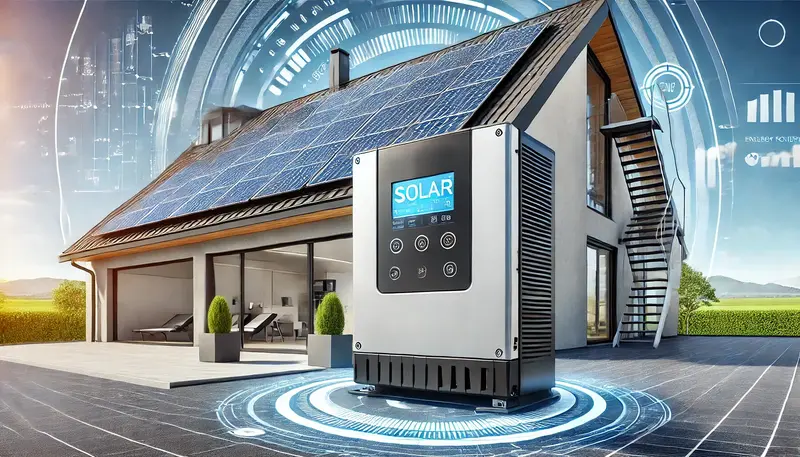
At the end of your journey through the world of inverters, it is important to summarize the most important points. The inverter is the heart of your photovoltaic system. It converts the direct current generated by your solar modules into alternating current that you can use in your home. But not only that – modern hybrid inverters offer additional functions, such as the integration of storage systems. This increases efficiency and ensures that you are well supplied even in the event of a power outage.
For beginners, there are some recommendations. First, you should be clear about your individual needs. What power do you require? Do you want a system that also works in an emergency? Choosing the right inverter is crucial. An informed purchase is the key to maximum efficiency and satisfaction. If you are unsure, consider consulting a professional or using online resources.
We are happy to advise you:
Further Topics to Explore
There are many more topics you can explore. Microinverters, energy management systems, and the integration of electric cars into your system are just a few examples. Each of these topics has the potential to sustainably shape your energy future. Remember that the optimal cooperation of components is crucial for the long-term success of your photovoltaic system.
The Journey to a Sustainable Energy Future
Your journey to a sustainable energy future has just begun. With the right knowledge and the right tools, you can make a big difference. The right knowledge can save costs in the long run and help you protect the environment. It is an investment in your future and the future of our planet.
“I hope this video has already helped you get a rough overview of inverters.”
In summary, with the right information and a sound decision, you can make the best choice for your photovoltaic system. Do not be discouraged if it seems complicated at first. With each step, you will become more confident and informed. Your decision for sustainable energy is not only good for you but also for the world around you.